Do First-Time Felony Offenders Go to Prison in Arizona? A Phoenix, AZ Guide
A first felony charge can leave you scared and uncertain. In Arizona, a first felony conviction does not always result in prison, but whether probation is available depends on the specific charge and applicable sentencing laws.
The potential outcome depends on the exact charge, whether the offense is classified as dangerous, and the sentencing laws that apply. A person’s criminal history, the available evidence, and plea negotiations can also affect the case. First-offender status matters, but it does not determine by itself whether probation will be available.
Don’t plead guilty or discuss the facts with investigators before reviewing the charge with a criminal defense attorney. Early legal advice can help you understand the potential consequences and protect your options.
What Does “First-Time Felony Offender” Mean in Arizona?
Under Arizona’s general sentencing law, a first-time felony offender is generally someone who has not previously been convicted of a felony. This does not necessarily mean the person has never been arrested, charged with a crime, or convicted of a misdemeanor.
Multiple felony charges, prior convictions from another state, and offense-specific sentencing laws can affect how a person is classified. An attorney must review the person’s criminal history and current charges to determine which sentencing rules apply.
When Is an Arizona Felony Eligible for Probation in Phoenix, AZ?
Some Arizona felonies are eligible for probation, while others require prison. Having no prior felony convictions may improve the available options, but it does not create an automatic right to probation.
Two questions must be considered: whether probation is legally available and, if it is, whether the court is likely to grant it. Important factors include:
- The felony classification
- Whether the offense is dangerous
- Whether the statute requires prison
- Prior convictions or probation violations
- The terms of a plea agreement
- Legally recognized mitigating circumstances
- Whether the charge may be reduced through negotiations
Can Probation Include Jail Time?
Probation allows a person to remain in the community under court-ordered conditions instead of serving a sentence in state prison. However, the court may still require the person to serve time in county jail as a condition of probation.
Depending on the offense and sentence, that jail term may be as long as one year or the maximum period of incarceration permitted for the offense, whichever is shorter.
This creates an important distinction between jail and prison:
- County jail: A person may serve time in a local jail as a condition of probation.
- State prison: A prison sentence is served in the custody of the Arizona Department of Corrections.
Probation may also require supervision, treatment, drug or alcohol testing, regular reporting, payment of restitution, and compliance with other court-ordered conditions. Probation follows a conviction and is different from having a felony charge dismissed.
How Dangerous and Non-Dangerous Felonies Affect Sentencing in Phoenix
The distinction between dangerous and non-dangerous offenses can significantly affect whether a first-time felony offender is eligible for probation.
What Makes an Offense Dangerous?
Under Arizona law, a dangerous offense involves one or more of the following:
- The use, discharge, or threatened use of a deadly weapon
- The use or threatened use of a dangerous instrument
- The intentional or knowing infliction of serious physical injury
An allegation involving a weapon or injury does not automatically establish that an offense is dangerous. The prosecution must properly allege dangerousness, and the allegation must generally be admitted by the defendant or proven before the dangerous-offense sentencing requirements apply.
Do Dangerous Offenses Require Prison?
If a person is convicted of a felony that has been proven as a dangerous offense, Arizona law generally requires a prison sentence. A person sentenced under the dangerous-offense statute is not eligible for probation, even if the person has no prior felony convictions.
Are Non-Dangerous Felonies Eligible for Probation?
A non-dangerous felony may offer more sentencing flexibility. Depending on the specific charge, a first-time offender may be eligible for:
- Probation
- Probation with county jail time
- A prison sentence
Probation is not guaranteed simply because an offense is classified as non-dangerous.
Other Offenses With Special Sentencing Rules
Other offense-specific laws can also require incarceration. Certain drug offenses, felony DUI charges, and dangerous crimes against children may be governed by sentencing rules that differ from the general first-time felony sentencing framework.
An attorney must review the exact charge, allegations, and applicable statutes before determining whether probation may be available.
Arizona’s Class 1 Through Class 6 Felony System
Arizona divides felony offenses into six classifications. Class 1 is the most serious, while Class 6 is the lowest felony classification. The classification helps establish the potential prison sentence, but it does not, by itself, determine whether someone will receive a prison sentence or qualify for probation.
Class 1 felonies are governed by offense-specific sentencing laws. For non-dangerous Class 2 through Class 6 offenses covered by Arizona’s general first-time felony sentencing statute, the possible prison terms are:
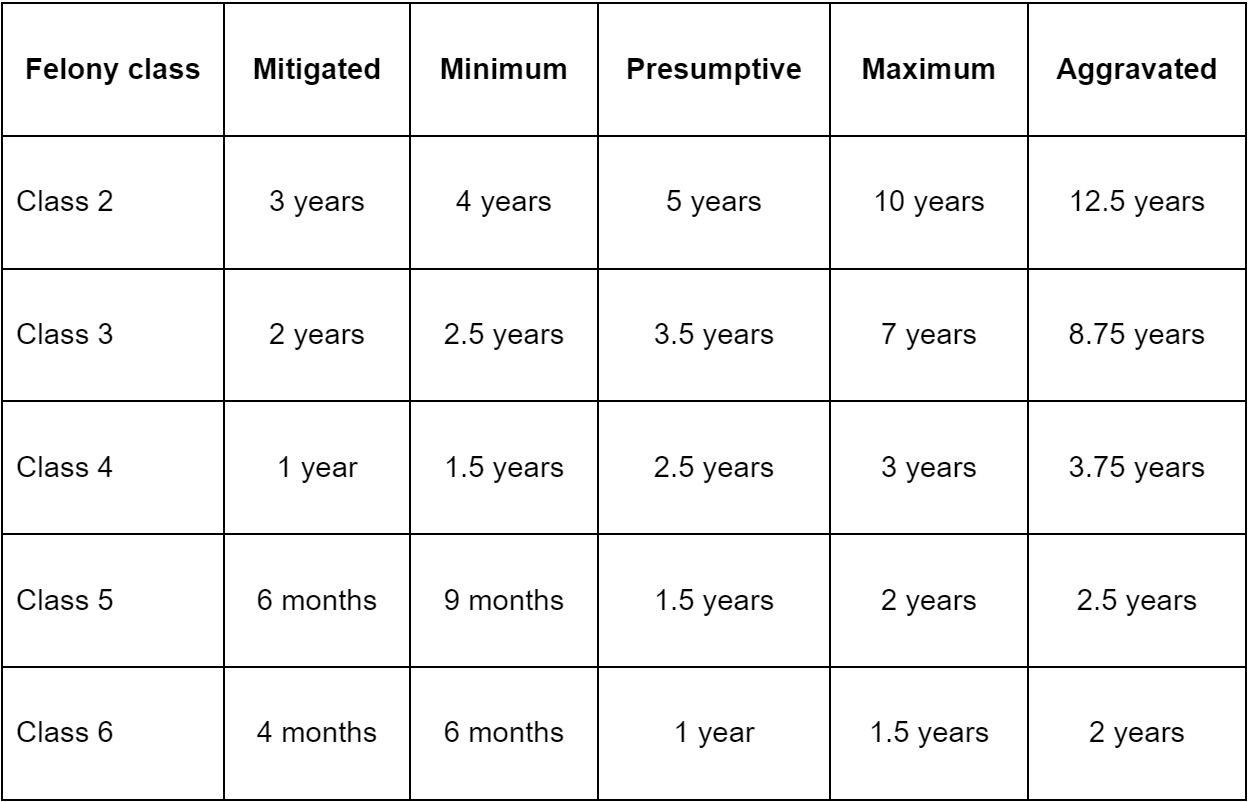
These ranges apply to first-time felony offenders sentenced under Arizona’s general sentencing law. Different rules may apply to dangerous offenses, repeat offenses, and charges governed by offense-specific sentencing laws.
How Arizona Determines a Prison Sentence for a First Felony Offense
For applicable non-dangerous felony offenses, Arizona law establishes five possible prison terms within each felony classification:
- Mitigated sentence: A term below the minimum sentence that may be available when sufficient mitigating circumstances support a lower sentence.
- Minimum sentence: The lowest sentence within the standard sentencing range.
- Presumptive sentence: The standard sentence established by law for the felony classification.
- Maximum sentence: The highest sentence within the standard sentencing range.
- Aggravated sentence: A term above the maximum sentence that may apply when sufficient aggravating circumstances are established.
These terms help the court select a prison term within the available sentencing range. They do not determine whether someone qualifies for probation. A plea agreement may also limit or change the sentencing options available to the court.
How Prosecutors and Judges Affect a Felony Case
Prosecutors and judges have different roles in an Arizona felony case. The prosecutor decides which charges to file and whether to offer or accept a plea agreement. Problems with the evidence or investigation may lead to a charge being reduced or dismissed.
If the case results in a conviction, the judge decides the sentence. The judge must follow Arizona law and the terms of any accepted plea agreement. The judge may consider the person’s criminal record and any factors that support a higher or lower sentence.
Having no prior felony convictions may help during plea negotiations or sentencing. However, a judge cannot grant probation when the law requires prison.
How an Arizona Felony Case Moves From Charging to Sentencing in Phoenix, AZ
Sentencing is only one stage of a felony case. A case may involve:
- An investigation or arrest
- A criminal complaint, indictment, or other charging document
- Initial court appearances and release conditions
- Disclosure and review of evidence
- Defense investigation and legal motions
- Plea negotiations or trial
- A conviction, if one occurs
- Sentencing under the applicable law
Each stage of a felony case can involve important deadlines and legal decisions. Having an attorney review the case early can help the defendant understand the process and prepare for what comes next.
What Should a First-Time Defendant Do After Being Charged?
If you’ve been charged with a felony, focus on protecting your rights and preserving your options.
- Don’t discuss the facts with police or investigators. Provide identifying information when legally required, but ask to speak with an attorney before answering questions.
- Don’t consent to searches without legal advice.
- Follow every release condition and attend every court date.
- Preserve charging documents, court paperwork, messages, photographs, and other relevant records.
- Don’t discuss the case on social media.
- Don’t contact an alleged victim or witness about the case.
- Contact a criminal-defense attorney promptly.
General information can’t replace advice about your specific charge, record, or sentencing exposure.
How The Nava Law Firm, PLLC Can Help With a Felony Charge
At The Nava Law Firm, PLLC, we help people understand the charges against them and the possible outcomes of their cases. We provide personal attention and clear communication throughout the legal process.
Our firm can:
- Explain the charge and possible sentence
- Investigate the evidence against you
- Challenge unlawful searches, statements, or other evidence
- Negotiate for a reduced charge or more favorable outcome when possible
- Prepare your defense for court, trial, or sentencing
Every felony case is different. We will review the facts, explain your options, and help you decide how to move forward. Learn more about our Arizona felony defense services.
Frequently Asked Questions
Can a first-time felony offender get probation in Arizona?
A first-time felony offender may qualify for probation when the offense and sentencing law allow it. Probation isn’t available in every case, particularly when mandatory prison provisions apply.
Does a first felony conviction automatically mean prison?
No. A first felony conviction doesn’t automatically require prison. The outcome depends on the offense, dangerousness, felony class, prior record, plea agreement, and applicable sentencing law.
Which first-time felony offenses require prison in Arizona?
A person convicted of a dangerous felony generally must serve a state prison sentence, even without a prior felony conviction. Dangerous crimes against children and some other offense-specific charges can also require prison. Certain felony DUI and drug offenses may carry mandatory incarceration. The exact requirements depend on the charge and applicable sentencing law.
Does having no criminal record help?
A clean prior record can be relevant to charging, plea negotiations, and sentencing. It doesn’t erase the charge or guarantee probation.
Can a plea agreement prevent prison?
A plea agreement may reduce the charge or address sentencing, but the result depends on the agreement, the law, and the judge’s authority. Mandatory prison provisions can limit available negotiations.
What should I do if I’m under investigation but haven’t been charged?
Don’t discuss the facts with investigators or consent to searches before speaking with a criminal-defense attorney. Early legal advice can help you understand your rights and avoid decisions that could affect the case.
Contact The Nava Law Firm, PLLC About an Arizona Felony Charge
If you’ve been arrested, charged, indicted, or investigated, don’t wait to learn whether a first felony conviction could lead to prison. Call The Nava Law Firm, PLLC at 602-975-4990 for a consultation or complete our online consultation form.
We’ll review the charge, possible sentencing exposure, and available defense options so you can make informed decisions about what comes next. Call today or submit the online form so we can begin reviewing your situation.